
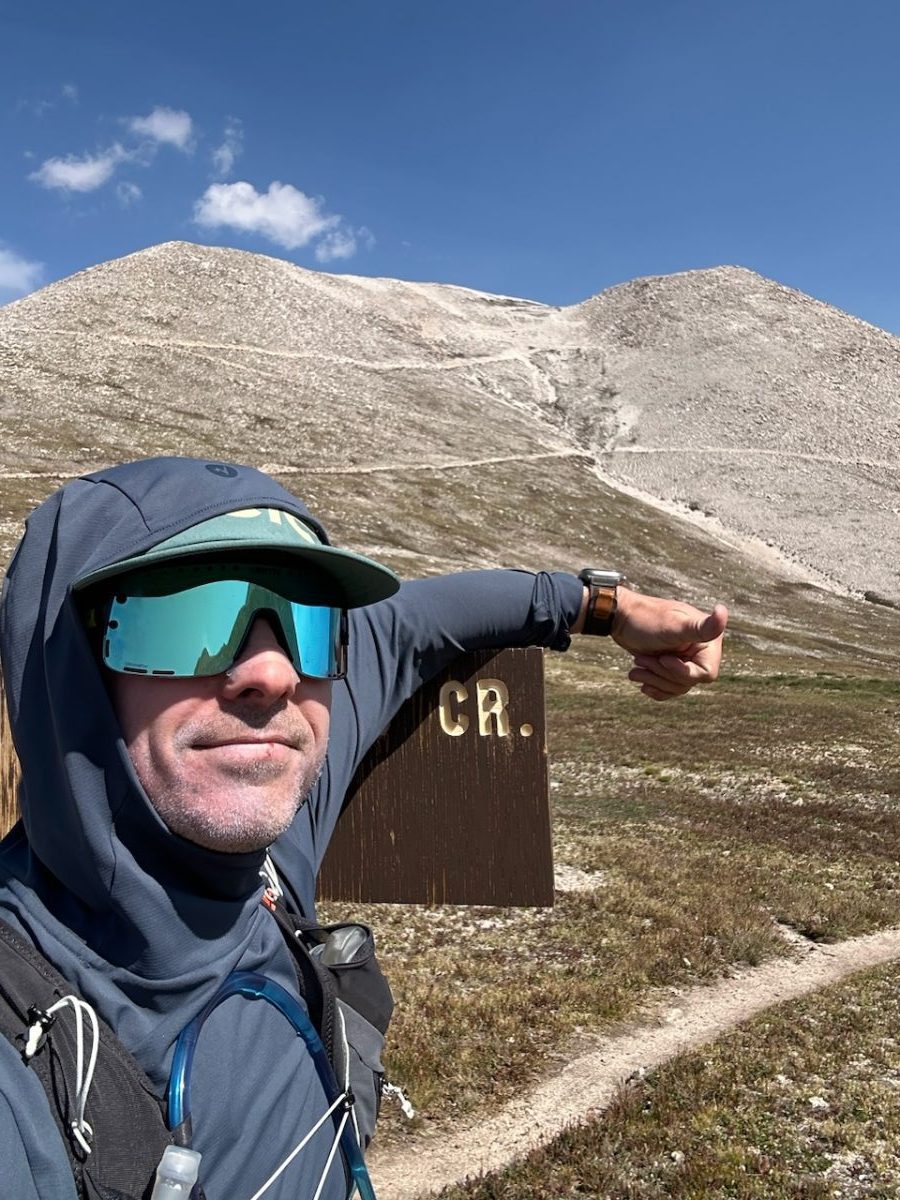
So You Want to Try Skyrunning.
Here’s Where to Start.
Clay Farnsley
You’re already running trails. Skyrunning is the next level — bigger
elevation, more technical terrain, and a race community that’s quietly one of the most exciting
in outdoor sport. Here’s what you actually need to know.
If you’ve been running trails for a while, you’ve probably heard the word
skyrunning thrown around. Maybe you’ve seen race footage of people basically climbing
vertical faces in running shoes, or stumbled across the Skyrunner World Series while
researching your next trail shoe. It looks spectacular. It also looks borderline insane.

The truth is somewhere in the middle. Skyrunning is genuinely challenging — that’s the
whole point — but it’s not as out of reach as it looks. If you’re already comfortable on technical
trails, you’re closer than you think.
This guide is written for trail runners who are curious but don’t know where to begin. We’ll
cover what skyrunning actually is, how to know if you’re ready, and exactly what gear you need
to get started safely.
What exactly is skyrunning?
Skyrunning is mountain running at high altitude on technical terrain. The sport has a
formal definition: races must take place above 2,000 metres (6,560 feet) in altitude, with a
gradient of at least 30% and a maximum difficulty of K3 on the UIAA mountaineering scale —
meaning no ropes or technical climbing required.
In practice, this translates to steep, exposed ridgelines, loose scree, scrambling sections,
and elevation profiles that would make most road runners weep. It’s not just running uphill —
It’s mountain running where the mountain genuinely pushes back.
Minimum altitude for a certified Skyrace
Minimum gradient on the course
Races in the 2026 Skyrunner World Series
The sport is governed by the World Skyrunning Association and sits at the intersection of
trail running and alpinism. The community is relatively small compared to road running, but
growing fast, and the World Series, now in its third decade, has become the benchmark for
competitive mountain running globally.
How it differs from trail running
You’re already a trail runner. So what actually changes when you step into skyrunning
territory?
Altitude. This is the obvious one. Most trail races you’ve probably done
sit below 2,000 metres. Skyrunning starts there. Above that altitude, your aerobic capacity
drops, your recovery slows, and conditions become genuinely unpredictable. The weather can
change in minutes. You need to be comfortable with that uncertainty.
Terrain technicality. Trail running includes everything from groomed
singletrack to rocky mountain paths. Skyrunning is firmly at the technical end — loose rock,
exposed ridges, scrambling moves where you’ll need your hands. If your trail running has
mostly been on packed dirt, this is a meaningful jump.
one where you have to read terrain, manage exposure, and stay calm when things get serious.”
Pacing and effort. On steep technical terrain, running becomes hiking.
A lot of skyrunning — even at elite level — involves power hiking on the ascents. The skill is
knowing when to run and when to hike efficiently, and learning to keep your heart rate
managed on terrain that wants to blow it up.
Safety margin. Trail running has inherent risk; skyrunning has more.
Navigation errors, sudden weather, and exposed scrambles all raise the stakes. Good
mountain judgment and solid kit aren’t optional.
The three skyrunning disciplines
Not all Skyraces are the same. The sport organises events into three main formats, each
with a different character.
Skyrace (SKY)
The classic format. Typically 20–50km with 2,000–4,000 metres of elevation gain. This is
where most beginners enter the sport — enough challenge to be meaningful, short enough to
be achievable with solid trail running fitness as your base.
Vertical Kilometre (VK)
A pure uphill race covering 1,000 metres of vertical gain, usually over 3–5km of horizontal
distance. Short, brutal, and surprisingly accessible — you don’t need great descending skills or
navigation ability. Just the ability to suffer uphill for 45 minutes to two hours. A great first
skyrunning event if pure climbing is your strength.
Ultra Skymarathon (ULTRA)
The long game. 50km and beyond, with serious elevation. These require strong mountain
experience, navigation skills, and the ability to manage yourself over many hours in alpine
conditions. Not where you start — but a compelling long-term goal.
Are you ready for it?
Honest answer: If you’re regularly running technical trails and you’re comfortable on steep
terrain, you’re probably closer to ready than you think. Skyrunning doesn’t require elite fitness
— it requires mountain judgment and the willingness to move slowly when the terrain demands
it.
You’re comfortable on exposed ridgelines. You’ve run trails with 1,000m+ of elevation
gain. You can navigate with a map or GPS in poor visibility. You know how to dress for
mountain weather. You’re not rattled by loose rock underfoot.
The skills that transfer most directly from trail running are aerobic fitness, downhill
confidence, and the ability to read terrain quickly. What you may need to develop is comfort at
altitude, scrambling technique, and mountain weather awareness.
- Comfortably run 25–30km on technical trails
- Experienced with 1,500m+ elevation gain in a single outing
- Confident on loose rock and exposed paths
- Know how to navigate in mountain terrain
- Can self-assess weather risk and turn around when needed
- Familiar with mountain emergency protocols
Skyrunning races are not the place to discover your limits with altitude or exposure for
the first time. Build experience on high mountain terrain before racing on it. Do a few non-race
days at altitude first. Know your body’s response above 2,500m before pinning a race number
on.

The gear you actually need
Good news: if you’re already a trail runner, you probably own most of what you need.
Skyrunning doesn’t require a total kit overhaul — but there are specific areas where the
demands are genuinely higher, and cutting corners creates real risk.
Mandatory race kit
Most Skyraces have a mandatory kit list. It typically includes an emergency bivvy, first aid
basics, whistle, map and compass, headlamp, waterproof jacket, and emergency food and
water. Check the specific race requirements — they vary, and race officials do check at the
start.
Layering for altitude
Mountain weather at 2,500m is not the same as weather on your local hills. A system that
works for two-hour trail runs will leave you exposed on a four-hour alpine race. You need a
proper wind and waterproof outer layer that packs small, a mid-layer you can add on a ridge,
and base layers that manage moisture when you’re working hard on climbs and getting cold on
technical descents.
Navigation
GPS watches are standard in skyrunning, but don’t rely on them exclusively. Download
the race GPX route, yes — but also know how to read a map if technology fails. Above 3,000m
in cloud, being unable to navigate by map is a serious problem.
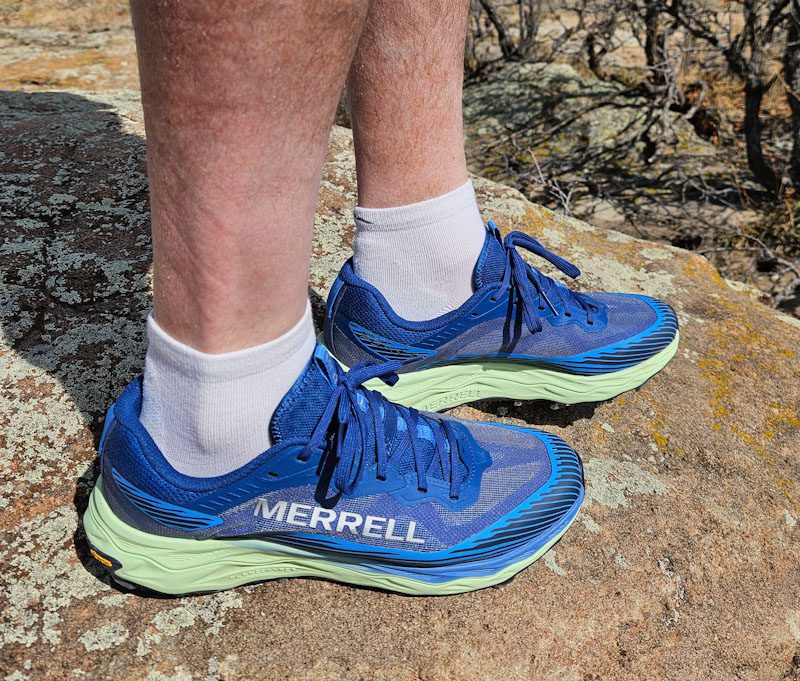
Shoes: what to look for
Your trail shoes matter more in skyrunning than in almost any other running discipline. The
terrain demands grip on wet rock, stability on loose scree, protection on technical descents,
and enough cushioning to keep you moving over serious elevation. It’s a lot to ask of one
shoe.
Here’s what to prioritise when choosing a skyrunning shoe, and two current options worth
considering the opposite ends of the approach.
Key criteria
- Outsole grip on wet rock (Vibram Megagrip is the benchmark)
- Lug depth of at least 4–5mm for mud and loose terrain
- Forefoot protection — rocky terrain batters unprotected toes
- Heel hold — loose-fitting shoes are dangerous on steep descents
- Debris exclusion — gusseted tongue or similar prevents stones mid-race
- Stack height balanced with ground feel — you need to read the terrain underfoot
Series. FloatPro midsole for cushioned long-distance comfort, full-length FLEXconnect for
stability on uneven ground, Vibram Megagrip outsole with 5mm lugs, and a completely
redesigned upper with gusseted tongue. The max-cushion approach makes it especially suited
to longer distances and less technical terrain.
Best for: Long-distance Skyraces + beginners
brand’s obsessive construction quality to the category. Built for technical mountain terrain with
a close-to-ground feel that lets you read the surface underfoot. Less cushion than the Agility
Peak 6, more precision — better suited to shorter, more technical routes where ground feel
matters more than comfort over miles.
Best for: Technical VK + shorter Skyraces
The choice between them comes down to the kind of skyrunning you’re targeting. If
you’re starting with a Skyrace (20–50km), the Agility Peak 6’s cushioning advantage over long
miles makes it the more forgiving choice. If you’re drawn to the Vertical Kilometre format —
shorter, more technical, purer climbing — the Sylan 2’s precision pays off.
Either way, make sure you’ve put serious mileage in your shoes before race day. Technical
terrain is not the place to discover a hotspot or a heel issue at kilometre 25.
Getting into racing
The best starting point is a local or regional mountain race rather than jumping straight
into a World Series event. Most mountain running associations run calendar-year series that
include Skyrace-format events at more accessible altitudes and distances — look for races in
the 20–25km range with 1,500–2,000m of gain as your first target.
Build at least one full season of mountain-specific training before your first race. This
means regular runs above 2,000m, practicing power hiking with poles on sustained climbs, and
getting comfortable on scrambling terrain. A race day is not the time to figure out if you can
handle exposure at altitude.
Don’t neglect the descent. Most skyrunning injuries happen on the way down, not up.
Specifically train technical downhill running — loose rock, steep grades, timed sections. Your
quads will thank you. So will your ankles.
Poles are worth learning before race day. They’re legal in most Skyrace formats and make
a genuine difference on long climbs — both for efficiency and knee load on descents. If you’ve
never run with poles, start practising months in advance, not the week before.
The Skyrunner World Series in 2026
If you want to understand where the sport is going, the Skyrunner World Series is where
to look. 2026 is a significant year — Merrell has expanded their title sponsorship to include not
just the global series but a brand new U.S. National Series, bringing competitive skyrunning to
American soil in a meaningful way for the first time.
Merrell Skyrunner World Series + U.S. National Series
Merrell’s expanded partnership brings 19 global Skyraces and a brand new four-race
U.S. National Series to 2026 — including a dual National + World Series stop at Beast of Big
Creek in Washington’s Olympic Peninsula. For U.S.-based runners, this is the most accessible
the World Series has ever been.
Beast of Big Creek in Washington is the flagship U.S. race and a particularly compelling
target for American trail runners wanting their first taste of World Series-level skyrunning. It
counts for both the National and Global series, meaning elite competition without needing to
travel to Europe.
Following the series — even before you’re racing in it — is one of the best ways to
understand what skyrunning demands. The footage, the athlete diaries, and the course profiles
give you a vivid education in what the sport actually asks of you.
Skyrunning has a way of reframing what you think you’re capable of. The mountains don’t
care about your 5K time or your marathon PR — they just ask whether you can move
efficiently, stay calm, and keep going when the terrain gets serious.
If you’re already running trails, you’ve built more of the foundation than you probably
realise. The rest is a matter of getting up there and seeing how it feels.
Clay Farnsley

“Hello, I’m Clay Farnsley, a passionate advocate for the great outdoors, and my journey has been shaped by the rugged landscapes I call home. Growing up in the heart of the Appalachian Mountains in Kentucky, I spent most of my formative years exploring the rolling hills and dense forests, fostering a deep connection with nature.
Now nestled at the base of the Rocky Mountains in Colorado, my love for outdoor adventures has only grown. From hiking, camping, and biking to the thrill of backcountry snowshoeing, I embrace the full spectrum of outdoor pursuits.

My interests extend beyond the trails to encompass everything from evaluating shelters, tents, and sleeping bags to exploring facets like food, nutrition, fitness, and technology. If it aids you in getting outside, having fun, and making the most of your outdoor experiences, then it’s a subject I’m eager to review!
Join me on this journey as we celebrate the beauty of the outdoors and share insights into gear, techniques, and innovations that enhance our connection with nature. Together, let’s explore, learn, and ensure that the joy of outdoor recreation is accessible to all who seek it.”

Leave a Reply